
Asheville, NC · Garage Door Service
Garage Doors on Asheville Homes From Before Insulation Codes Existed
Asheville's housing stock runs 1957 to 2001, median 1982 - years before insulation codes covered garage doors. Here's what that means for your door, your checks, and your winters.
- Repairs & new doors
- Springs & openers
- Serving 4 nearby communities
Checking It Yourself
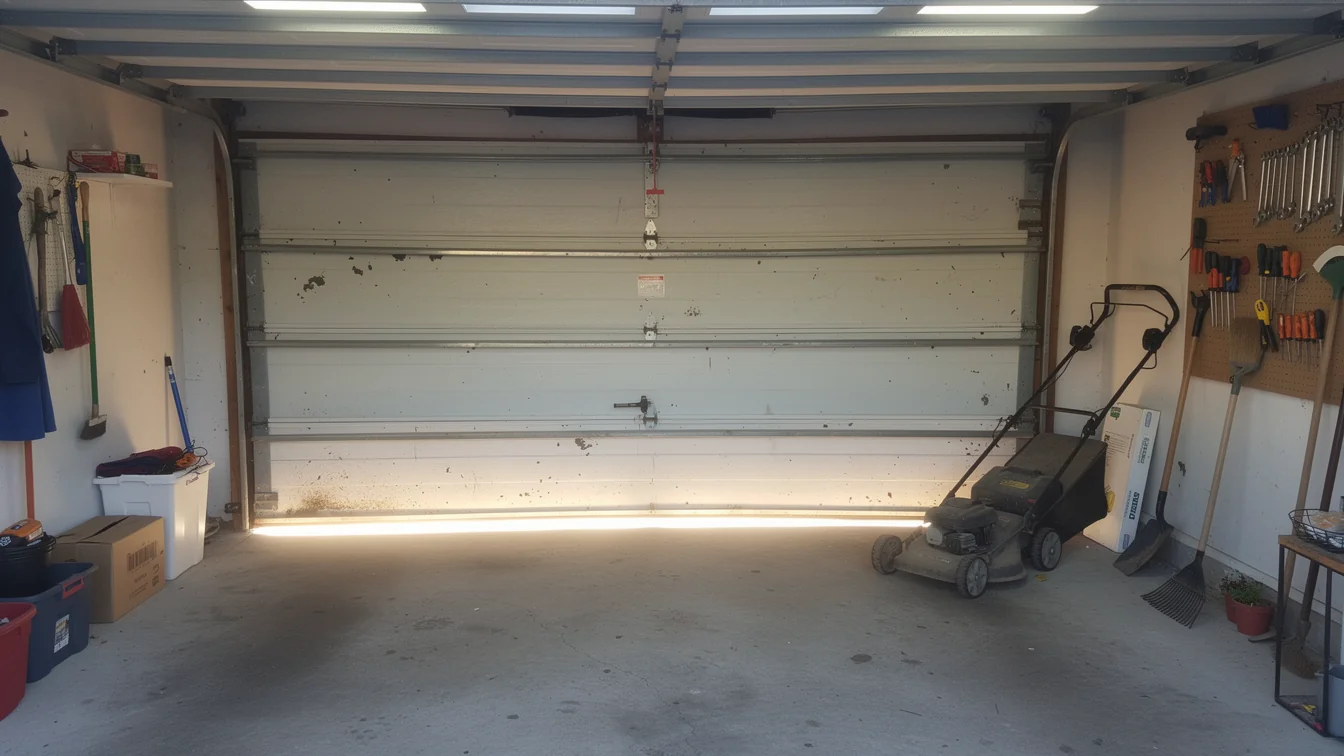
Start with the door itself, not the opener. Most houses across this service area went up between 1957 and 2001, with the median landing around 1982 - well before current codes required insulated, sealed garage doors. If your door is original or close to it, you're likely looking at a single-layer steel or wood panel with no foam core. Run your hand along the bottom seal on a cold morning. If you can feel air moving past it, that gap has probably been there since the house was built. Check the panels for flex - press flat on the middle of a panel. A door with a foam core barely moves. A hollow one gives noticeably. Look at the torsion spring too. Original springs on 1980s-era doors are well past their rated cycle count by now, and a spring that's sagged or shows a visible gap between coils is near the end, not just worn. None of this requires tools, just a flashlight and five minutes before you call anyone.
How Local Conditions Play In
Asheville sits in a cold climate band with real seasonal swings, and that matters more for an older door than people expect. A door built to match 1980s or 90s construction standards wasn't engineered with the freeze-thaw cycling this region puts it through every winter. Steel contracts in the cold, old weatherstripping goes brittle and cracks instead of flexing, and a spring that's already fatigued loses tension faster when the garage itself runs cold. None of the 23 named areas this company works in were built to a modern thermal code, so the pattern repeats from Oakley a couple miles out to Mars Hill eighteen miles northwest - older stock, same cold exposure, same wear pattern on hardware that was never rated for it. This isn't a problem you fix by cranking the spring tighter. It's a mismatch between what the door was built for and what the winters here actually do to it.
When to Call Someone
Call if the door is noticeably heavier to lift by hand than it used to be - that's spring fatigue, and it gets worse, not better, especially once cold weather sets in. Call if you see daylight around more than one edge of the door when it's closed, since that's not a weatherstrip problem anymore, it's the panel or track out of alignment. Call if the opener strains or reverses partway through a cycle; that's usually the door fighting a worn spring, not the opener failing. What you shouldn't do is keep adjusting the opener's force settings to compensate for a door that's gotten harder to move. That masks a mechanical problem instead of fixing it, and on a door this age, it's often cheaper in the long run to deal with the spring or panel now than to keep forcing a motor to do a spring's job.
The Problem
With roughly 23,215 owner-occupied houses across this service area, a large share of them are still running the garage door that came with the house when it was built sometime between 1957 and 2001. That's the real issue: these doors predate the insulation requirements that are standard now, so you've got thin steel or bare wood panels, minimal or no weatherstrip, and hardware sized for a lighter design era. None of that was wrong when the house was built - it was normal for 1982. It just hasn't aged well against a cold climate that keeps cycling those materials through expansion and contraction every winter. We don't push full replacement on every old door we see. Plenty of these can be sealed, re-sprung, and kept running for years. But a door with cracked panels or a track that's bent from age usually isn't worth patching again - at that point replacement costs less over time than another repair call.
Frequently asked questions
Is my garage door too old to repair?
Not necessarily. A lot of doors from the 1980s and 90s just need a new spring, seal, or panel. Age alone isn't a reason to replace - but if the panels are cracked or the track is bent from years of strain, repair starts costing more than it's worth, and that's when replacement makes more sense.
Why does my door feel heavier in winter?
Cold makes steel contract and old torsion springs lose tension faster than they do in warmer months. If your door dates to the original build of the house, that spring has already been cycling for decades, so cold weather just exposes fatigue that was already there.
Do I need an insulated door if mine never had one?
You don't need one, but it changes a lot. Houses in this area were mostly built before insulated garage doors were standard, so swapping to a foam-core door cuts down on the cold air and temperature swing your garage sees, which also eases strain on hardware.
Related garage door services in Asheville
More garage door guides
Book garage door service in Asheville
Call now or request a quote - tell us what the door is doing and where you are.