Asheville, NC · Garage Door Service
What Your Garage Door Is Actually Telling You
Asheville homes built between 1957 and 2001 carry different hardware than new builds. Learn which garage door noises mean wear and which mean a real problem.
- Repairs & new doors
- Springs & openers
- Serving 4 nearby communities
Checking It Yourself
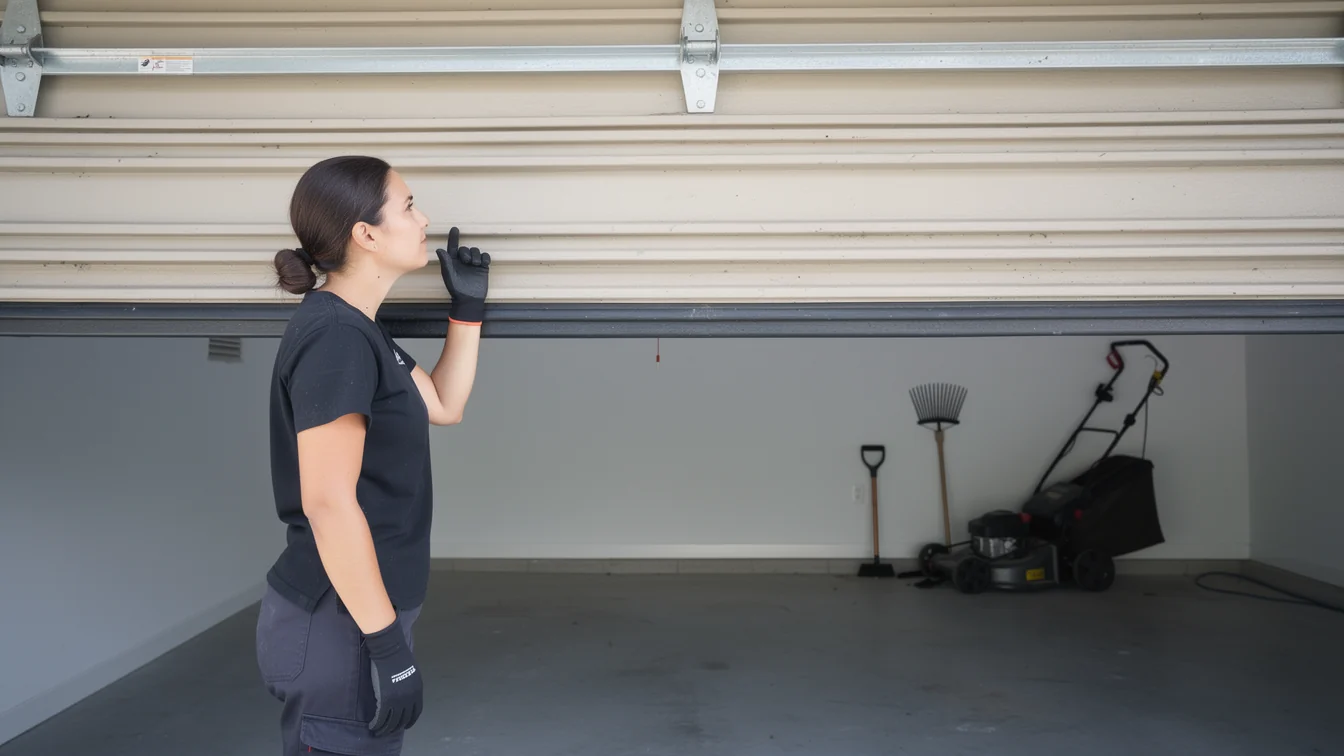
Most houses on this side of the mountains were built between 1957 and 2001, with the bulk going up in the 1980s and 90s - Oakley, Grove Park-Sunset, Haw Creek, Skyland, and the other close-in areas are full of doors on original or first-replacement torsion hardware. Before you call anyone, open and close the door a few times with the garage light on and your hand off the wall button so you can watch and listen.
A rhythmic thump once per rotation usually means a flat spot on a roller - common once a door hits 20 to 30 years, which a lot of this housing stock has now crossed. A sharp metallic ping as the door reaches the top is often the torsion spring's wind catching on a worn end bearing, not the spring itself failing yet. Grinding that gets louder as the door moves is almost always the opener's drive gear, plastic on older chain-drive units, wearing down.
Check the track brackets while you're at it - lag bolts on 1980s-era wood jambs loosen over decades, and a loose bracket sounds like a rattle more than a squeal. None of this requires tools beyond a flashlight. What it does require is paying attention before the noise changes character, because a flat-spot thump and a cable about to fray sound almost nothing alike once you know what to listen for.
How Local Conditions Play In
This area sits in a severe cold climate band, and that matters more for a garage door than most owners expect. Steel torsion springs lose a little tension every time they cycle through a hard freeze and back, and the grease on rollers and hinges thickens in cold air, which is what turns a quiet door into a groaning one on the first really cold morning of the season.
Houses built in the 1982 median-year range for this area typically have steel tracks and galvanized hardware sized for the building codes of that era, not for the cycle counts a door runs today. Cold tightens tolerances across the whole system - track-to-roller clearance shrinks slightly, cables sit a little stiffer on the drum - and a door that was marginal in October will tell you about it in January.
The honest limitation here: lubricant alone doesn't fix a spring that's lost tension from decades of temperature swings, and spraying WD-40 on a noisy opener gear just delays the grinding by a week or two. If a noise shows up specifically on cold mornings and goes quiet by afternoon, that's a strong sign the hardware is near the end of its working life for this climate, not that something is broken outright yet.
When to Call Someone
Call before the door stops working, not after. A grinding sound that's gotten louder over two or three weeks, a spring that makes a loud bang rather than a clean ping, or a cable that looks frayed where it wraps the bottom bracket - any of those is worth a service call on a door this old, especially across the 1957-2001 stock that makes up most of the neighborhoods out past Oakley and Biltmore Lake toward Enka.
We don't troubleshoot openers over the phone past a basic reset, and we won't quote a spring replacement sight unseen - torsion spring sizing depends on door weight and wind count, and guessing wrong on a double door means doing the job twice. If your door is original to a house built in the early 1980s, a technician on site can usually tell within a few minutes whether you're looking at a $30 roller fix or a full spring and cable job.
One more thing worth saying plainly: if the noise is coming from the opener's gear and the unit itself is original to the house, replacing the opener often costs less than repairing one that old, since parts for units from that era are getting hard to source.
The Problem
The real issue in this part of western North Carolina isn't any single bad sound - it's that a lot of the housing stock, built mostly in the 1980s and 90s with some going back to 1957, is reaching the point where several components wear out close together. A spring, a set of rollers, and an opener gear installed the same year tend to fail within a year or two of each other, not decades apart like a newer hybrid system might.
Add a severe cold climate that stresses steel hardware every winter, and you get doors that go from
The Problem
The real issue across this part of western North Carolina isn't one bad sound - it's that a lot of the housing stock, built mostly in the 1980s and 90s with some dating to 1957, is hitting the age where several parts wear out close together. A spring, a set of rollers, and an opener gear installed the same year tend to fail within a year or two of one another, not decades apart the way they might on a newer hybrid system.
Add a severe cold climate that stresses steel hardware every winter, and a door can go from a minor rattle to a dead spring in a single cold snap. Across roughly 23,000 owner-occupied houses in this service area, that pattern repeats block by block - it's not an unlucky house, it's an age-and-climate problem shared by most of the neighborhood.
The tradeoff homeowners face is real: replacing a whole aging system costs more up front than fixing one part, but fixing one part on a door this old often just moves the next failure a few months down the road. There's no universal right answer - it depends on how much of the original hardware is still in place and how the door is being used day to day.
Frequently asked questions
Why does my garage door only make noise in cold weather?
Cold thickens lubricant and tightens metal tolerances, so a door that's slightly worn stays quiet in warm weather but groans or grinds once temperatures drop. Given the severe cold winters here, that's one of the most common complaints we hear in the colder months, and it usually points to hardware that's near the end of its service life.
My house was built in the 1980s - is that why the door is loud?
Possibly. Most of the housing in this area went up between 1957 and 2001 with a median build year around 1982, and original torsion springs, rollers, and openers from that era are reaching 30 to 40 years of cycles. That's well past the typical working life for steel springs and plastic opener gears.
Can I just oil everything and see if the noise goes away?
Lubricant helps with rollers and hinges but won't fix a spring that's lost tension or a cracked opener gear. If the noise comes back within a week or changes character - a ping turning into a grind, for instance - that's a sign the problem is mechanical, not just dry metal.
Is a loud opener always a sign I need a new one?
Not always. Sometimes it's a worn drive gear that can be replaced on its own. But if the opener is original to a house built decades ago, parts can be hard to find, and in that case replacing the whole unit is often cheaper than repairing it.
Related garage door services in Asheville
More garage door guides
Book garage door service in Asheville
Call now or request a quote - tell us what the door is doing and where you are.