
Asheville, NC · Garage Door Service
When a Spring Goes in Cold Weather Around Asheville
Why Asheville's 1957-2001 housing stock and severe cold winters mean torsion springs fail without warning, and what a homeowner can check before calling a tech.
- Repairs & new doors
- Springs & openers
- Serving 4 nearby communities
Checking It Yourself
Most houses on this side of the mountains, from Oakley to Grove Park-Sunset to Haw Creek, went up somewhere between 1957 and 2001, with the bulk of that stock dating to the 1980s and 90s. That matters here because a torsion spring has a rated cycle life, and a door installed when the house was built is now 25 to 65 years old. If yours has never been replaced, you're past due.
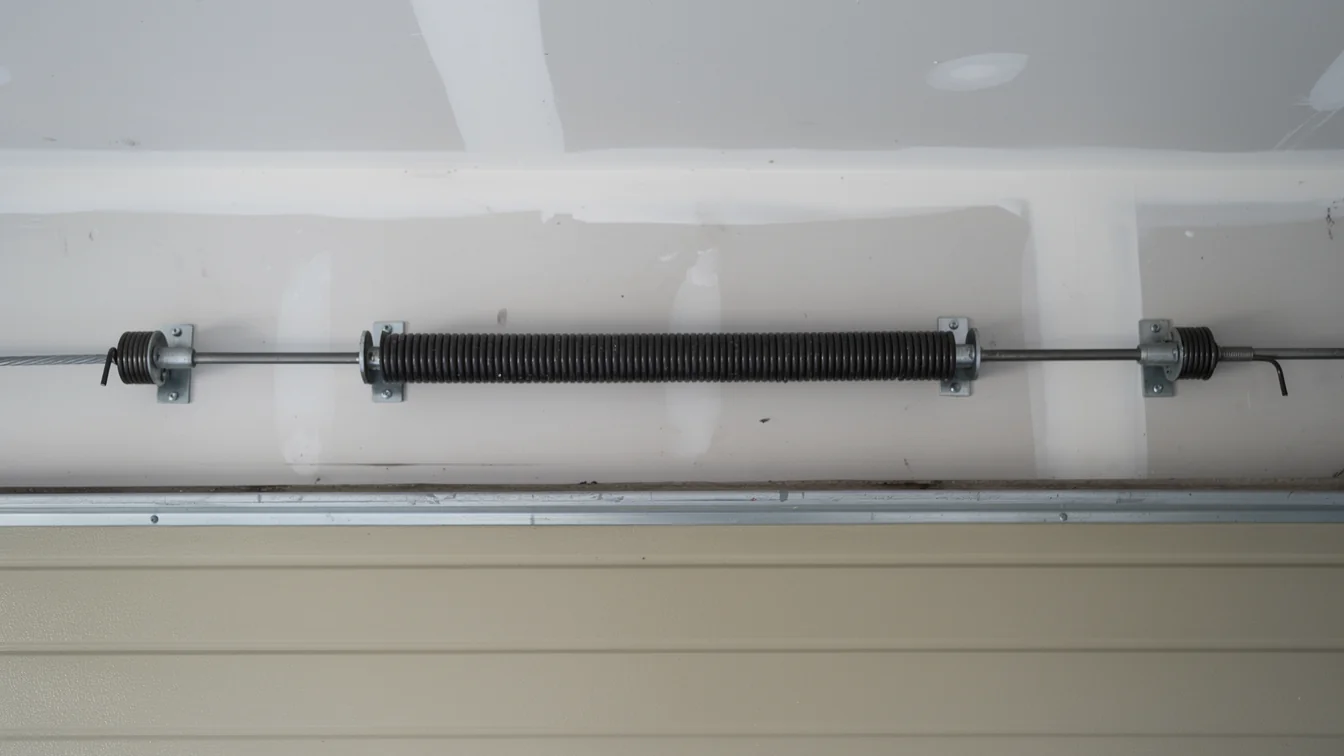
Start with the obvious: unplug the opener, pull the red release cord, and try lifting the door by hand. A door in balance should stay put at waist height. If it slams down or shoots up, the spring has lost tension or already broken. Look at the spring itself, coiled above the door - a gap in the coil means it's snapped. Check the cables on either side of the bottom bracket for fraying. Don't cut a wound spring loose yourself, and don't try to adjust the winding cones. That's the one job on this list that isn't a DIY fix, even for a handy homeowner.
If the door opens with a grinding or popping sound before it fails outright, that's the spring telling you it's close. Catching it there beats catching it on a 20-degree morning when you're already late for work.
How Local Conditions Play In
Asheville sits in a severe cold climate band, and that's not just a comfort issue for the spring - cold steel is less elastic. A torsion spring that's been flexing fine for years can finally let go on the first hard freeze of the season, because the metal has less give right when the morning temperature drop puts the most load on it. Garages here aren't usually heated, so the spring in your garage sits at outside temperature most winter mornings.
Across the 23 named communities in this area, from Weaverville and Black Mountain down through Fletcher and Mills River, that pattern repeats: older stock, unheated garages, and a real cold season. It's a combination that doesn't show up the same way in a mild climate, where a spring can limp along for an extra year or two without the same stress on it.
Humidity swings through the mountain seasons also mean rust can creep into a cable or a worn bearing plate faster than you'd expect for the part's age. Combine rust with a cold snap and a marginal spring, and you get a door that worked yesterday and won't move today.
When to Call Someone
Call before the spring fully breaks if you can. A door that's heavy to lift by hand, makes a new noise, or has visible gap in the coil is a job worth scheduling now rather than after it fails on a Saturday night. Once a spring snaps, the door is not safe to run on the opener - the opener isn't built to lift that weight alone, and you risk burning out the motor or dropping the door.
Given the age of a lot of garage doors in this area - houses built as far back as 1957 median to as recent as 2001 - a failed spring is often not the only worn part. Cables, rollers, and the bottom bracket all age together. A tech who's already up on the ladder for the spring can tell you honestly whether the rest of the hardware has a few years left or not.
The Problem
The honest limitation here: we can't predict exactly when a given spring will go, and we won't quote a repair over the phone without seeing the door, since the right spring size depends on door weight and the drum setup, which varies even among houses built in the same decade. What we can tell you is that in a service area with roughly 23,215 owner-occupied houses and a housing stock centered on the early 1980s, a lot of original hardware is well past its working life.
Replacement beats repair once a spring has broken and the cables or drums show wear too - patching one part while the rest is tired just moves the failure date a few months down the road. If your door is still original to a house built in that 1957-2001 window and it's never had the spring swapped, that's the conversation worth having before winter, not during it.
Frequently asked questions
Why did my spring break on such a cold morning?
Cold steel has less elasticity, and an unheated garage in this area sits at outside temperature most winter mornings. A spring that's near the end of its cycle life is far more likely to snap when it's flexing against stiffer metal in a hard freeze than it would on a mild afternoon.
Is my house old enough that this is likely original hardware?
If your house was built anywhere from 1957 through 2001, which covers most of this area, and the spring has never been replaced, it's reasonable to assume it's original or close to it. Springs have a rated cycle life, and decades of use plus cold-weather stress is a common combination here.
Can I replace the spring myself?
We'd rather you didn't. Winding a torsion spring under tension is the one part of this job that causes real injuries. Everything else on a basic inspection - lift test, cable check, listening for noise - is fine to do yourself.
Related garage door services in Asheville
More garage door guides
Book garage door service in Asheville
Call now or request a quote - tell us what the door is doing and where you are.